

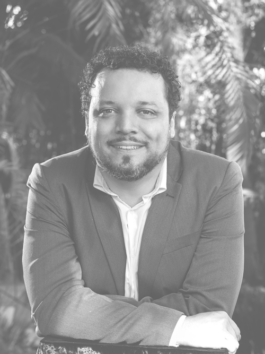


Esther Adeyemo
Esther Adeyemo is a British PhD student and research associate at Ruhr-Universität Bochum. She is the recipient of the 2021 Peter Boyle MA Graduate Teaching Assistantship awarded by the British Association for American Studies. In 2023, she completed her MA in American Studies at the University of Wyoming with a thesis entitled “Spectres of Identity: Race, Subjectivity, and Ontological Defiance in Nella Larsen’s Passing (1929).”
Her research focuses on race and decoloniality, subjectivity and identity formation, and the role of Black speculative fiction in reimagining new ways of being and becoming. She is particularly interested in questions of passing, hybridity, and the relationship between genre, infrastructure, and social belonging in twentieth- and twenty-first-century American literature.
Esther has taught undergraduate courses at The University of Wyoming including Cultures of Nature and Introduction to African American Studies, with an emphasis on close reading, interdisciplinary inquiry, and inclusive, discussion-led learning environments.
See also:
→ Project: „The Novel of Passing as an Archive of Infrastructural Resistance“ (part of Project 6, “Race as Infrastructure and Literary Infrastructures of Resistance”
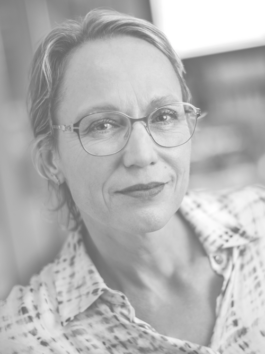
Tomaz Amorim
Dr. Tomaz Amorim is the Principal Investigator of the sub-project "Extractivism and Infrastructure in Brazilian Literature" (TP 4) within the DFG Research Unit Infrastructure: Aesthetics and Supply at Ruhr University Bochum. In addition to his work in Bochum, he is an Associated Investigator at the Maria Sibylla Merian Centre Conviviality-Inequality in Latin America (Mecila), funded by the BMFTR, where he previously served as Academic Coordinator. He is also an Associated Researcher and member of the Executive Board at the Brazilian Center for Analysis and Planning (CEBRAP).
He obtained his PhD in 2018 in Literary Theory and Comparative Literature at the University of São Paulo (USP) with a thesis on Franz Kafka and Walter Benjamin (Contar do tempo interrompido / Narrating Interrupted Time), which included a research stay at Humboldt University of Berlin. He earned his Master's degree at the University of Campinas (Unicamp) as a scholarship holder of the Albertus Magnus Program at the University of Cologne. His academic career in Brazil was supported by scholarships from FAPESP, CAPES, and CNPq. Following his doctorate, he was a Postdoctoral Researcher at Unicamp, where he researched non-modern interfaces in Oswald de Andrade and Walter Benjamin, and a Fellow at the Cluster of Excellence Temporal Communities: Doing Literature in a Global Perspective at the Freie Universität Berlin.
Furthermore, Tomaz Amorim is actively involved at the interface of academia and society, including roles as a teacher and pedagogical consultant for the social movement UNEAFRO Brasil. As a translator, he has translated works by Franz Kafka and Johann Jakob Bachofen into Portuguese. As a writer and critic, he published the volume Arquipélago: literatura brasileira contemporânea (2023) as well as the poetry collections Plástico pluma (2018) and Meia-lua soco (2020). His upcoming editorships include Na Semana que vem: História e futuro da Semana de Arte Moderna de 1922 (Editora da Unicamp, 2026) and Aesthetics of Extractivism (Mecila, Clacso, 2026).
His current research project investigates the aesthetic configurations of extractivism in Brazilian literature. He analyzes how infrastructural forms—from coffee plantations to mining—shape literary genres and modes of narration. The focus lies on the ambivalence of a modernization that is never completed and is potentially blocked by extractivism itself. The corpus comprises a revision of Brazilian Modernism from the perspective of extractivist practices as well as contemporary catastrophe literature. Particular attention is paid to Indigenous and Quilombola perspectives, which propose non-extractivist relationships to the territory through innovative aesthetic forms tied to non-Western epistemologies.
See also:
→ Project 4: „Extractivism and Infrastructure in the Brazilian Literature“
Photo ©Joelson-Silva
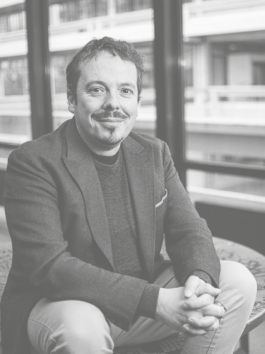
Laura Bieger
Laura Bieger is Professor of American Literature and Culture at Ruhr-Universität Bochum. She is the author of Reading for Democracy (Metzler 2025), Belonging and Narrative (transcript 2018), and Ästhetik der Immersion (transcript 2007). Her essays have appeared in New Literary History, Narrative, Parallax, Studies in American Naturalism, Amerikastudien/American Studies and ZAA. She is a member of the DFG-funded Research Group “Infrastructure: Aesthetics and Supply,” where she leads the project “‘Race as Infrastructure’ and Literary Infrastructures of Resistance.” Together with Philipp Loeffler, she is currently co-editing two special issues: “After Contemporary Literature” for American Literature, and “What was Contemporary Literature? Or: The End of Periodization as We Know It” for Post45.
See also:
→ Project: „Genre as Infrastructure and the Specter of Race“ and “The Literary Engines of the Underground Railroad” (part of Project 6, “Race as Infrastructure and Literary Infrastructures of Resistance”)
Photo ©Damian Gorczany
Gabriel Carneiro
Gabriel Carneiro (GABS_) works in theater, performance, and artistic mediation. Studied theater and education in Brazil and holds an M.A. in Scenic Research from Ruhr University Bochum. Research explores resonances between acting practice and dramaturgy, and themes such as migration, sustainability, cultural diversity, and queer ecologies from a Global South perspective. GABS_ works as a student research assistant in Subproject 4 of the Research Unit.
Natalie Erkel
Natalie Erkel is a German-American PhD student and research assistant (wissenschaftliche Mitarbeiterin) at Ruhr-Universität Bochum (RUB). She holds both German and U.S. secondary school diplomas and graduated from Georg-August-Universität Göttingen in 2022 with a Master of Education in French and English, as well as a Master of Arts in North American Studies and English: Language, Literatures and Cultures. She also spent two years abroad studying French, English, and comparative literature at the Université de Tours in Tours, France, and at the Universidad Nacional Autónoma de México (UNAM) in Mexico City. During her studies, she was a member of the German Academic Scholarship Foundation (Studienstiftung des deutschen Volkes). At Georg-August-Universität Göttingen, she taught numerous courses in English didactics, U.S. cultural history, short fiction, and academic writing. At Ruhr-Universität Bochum, she has taught courses entitled Cultural History and Rhetoric: Feminism in the U.S., Women’s Writing in the 19th and 20th Century, Feminist Utopias and Dystopias, Contemporary Science Fiction, Manifestos, Representations of Slavery, and Transcendentalism (Emily Dickinson and Walt Whitman). Her research interests include feminism, gender studies, Afrofuturism, utopian and dystopian literature, and speculative fiction.
See also:
→ Project: “Black Speculative Fiction as an Infrastructure of Afrofuturist Art and Community Building” (part of Project 6, “Race as Infrastructure and Literary Infrastructures of Resistance”)
Jörn Etzold
Jörn Etzold has been Professor of Theater Studies at the Ruhr University Bochum since 2017. He is spokesperson of the Research Unit and leads project 1. He also is the spokesperson of the Humanities Hub Spaces in Transition: Resources, Entangled Histories, Material Practices at Ruhr University. From 2020-2025, he has been PI of the DFG Research Training Group Documentary Practices. Etzold was Senior Fellow of the Merian Centre Mecila in São Paulo in 2023 and Visiting Associate Professor at Northwestern University, Evanston in 2015. He has also conducted research and taught at the universities of Giessen, Erfurt, Weimar and Frankfurt am Main. He is currently researching infrastructure and aesthetics, theater and performance in post-industrial environments and theater and legal criticism. He has also been active as a theater maker and translator.
Recent publications include:
→ „The Nambikwara Case”, in: INSERT. Artistic Practices as Cultural Inquiries, no. 8, Transforming the Anthropo(s)cene, 2025, DOI: https://doi.org/10.5281/zenodo.17771772
→ "Extraktive Prozesse. Tatorte und Gerichtsorte in Milo Raus Kongo Tribunal“, in: Manuel Baumbach, Yasmin Temelli (ed.): TatOrte: Räume des Kapitalverbrechens von der Antike bis heute, Heidelberg: Winter 2025, pp. 175-197.
→ Prävention. Zur Immunisierung von Körpern und Gemeinwesen, Hamburg: Textem 2023
→ „Textuelle Infrastrukturen des Theaters. Dramaturgie als Vermittlung“, in: Journal of Literary Theory, vol. 17, no. 1, 2023, pp. 88-110.
→ As editor: Special Issue: Ästhetik der Infrastruktur (Aesthetics of Infrastructure), Sprache und Literatur, vol. 127, no. 1, 2023.
Forthcoming inter alia:
→ „Legale Ambiguität und Infrastruktur (São Paulo) Ein Essay“, in: Archiv für Mediengeschichte, no. 21, 2024 [2026]
→ As editor with Tomaz Amorim: Estéticas del extractivismo, Buenos Aires: CLACSO 2026
→ Theatres of the Proto-Juridical. The Russell Tribunals, London: Routledge 2026.
See also:
→Project: „Art Institutions and their Infrastructure in Deindustrialization and Extractivism” (part of Project 1, “Hollowed-Out Landscapes: Imaginations of Life amid Infrastructures of Extraction”)
Photo ©Damian Gorczany
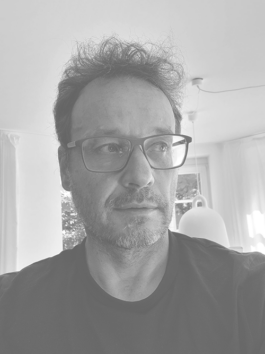


Oliver Fahle
Oliver Fahle is Professor of Film Studies at Ruhr-University Bochum and principal investigator of the research unit “Infrastructure: Aesthetics and Supply” at the Ruhr-University Bochum. He was one of the principal investigators of the doctoral school (Graduiertenkolleg) “The Documentary: Excess and Deprivation” (2016–2025). He is also responsible for the administration of the IMACS Master degree program in Bochum together with Hannah Peuker. His research focuses on the theory and aesthetics of contemporary film, documentary film, and Brazilian cinema. He is particularly interested in the transformations of film under the influence of other media.
His most important or recent publications:
Books:
→ Theorien des Dokumentarfilms: Zur Einführung, Hamburg 2020
→ also in Italian translation: Teorie del film documentario, Torino: Einaudi 2023.
→ Friedrich Balke, Oliver Fahle, Annette Urban: (ed.) Das Dokumentarische der Gegenwart, Bielefeld 2020.
Articles:
→ Oliver Fahle: Der Leihraum. Tiere und die Grenze zwischen Leben und Tod, in: S. Lederle, J. Seifert, M. Siegler (Hg.): Grundbegriffe der Medienphilosophie. Zwischen Affekt Relation Milieu, München: Brill/Fink 2024, S. 101–119.
→ Oliver Fahle: Katastrophe, Klasse, Katharsis. Schiffbrüche im Film, in: M. Baumbach/Y. Temelli (Hg.): Schiffbruch. Von Untergängen und Neuanfängen, Stuttgart 2024, S. 309–324.
→ Oliver Fahle und Felix Hasebrink: Film/Infrastruktur/Szene, in: Sprache und Literatur 52, H. 127, München 2023, S. 95–115.
→ Oliver Fahle: Andere Szenen. Geschichte und Diskurs des zeitgenössischen brasilianischen Dokumentarfilms, in: Montage AV 30/01/22, S. 37–55.
See also:
→ Project: „Data-based Cinematic Scenes of Infrastructure” (part of Project 2, “Cinematic Infrastructure Scenes”)
Henriette Gunkel
Henriette Gunkel is Professor of Transformation of Audiovisual Media with a Focus on Gender and Queer Theory at the Institute for Media Studies at Ruhr University Bochum. Her research focuses on memory practices, infrastructures of extraction, and politics of time from a decolonizing and queer-feminist perspective. She is currently working on a monograph titled Genocidal Remains: Sand, Atmosphere, Memorialization.
See also:
→ Project: „Desert Memory: Infra-Aesthetics and Atmospheric Remains in the Afterlife of Namibia’s Genocide” (part of Project 3, “Aesthetic Practices of Attunement as Access to Colonial Infrastructures of Extraction”)
Felix Hasebrink
Felix Hasebrink is a postdoctoral research associate at the Institute for Media Studies at Ruhr University Bochum and a Principal Investigator of the research group "Infrastructure: Aesthetics and Supply." He earned a B.A. and M.A. in Media Studies and Comparative Literature from Ruhr-University Bochum. His PhD dissertation on the aesthetics of film production in contemporary "making-of" documentaries was published by transcript in 2024. He worked as a research associate at the Institute for Media Studies at Ruhr University Bochum as well as at the Institute of Art and Visual Culture at the University of Oldenburg. His current research focuses on cinematic aesthetics of infrastructure, audiovisual media, and physical remains, and the history and theory of animation.
See also:
→ Project: „Idle Worlds. On the Media Aesthetics of Vacant Infrastructure” (part of Project 2, “Cinematic Infrastructure Scenes”)
Photo ©Ansgar Dlugos
Sara Jiménez Fernández
Sara Jiménez Fernández is a researcher working through collective practices in the intersection of care, sound, feminist theory, and political aesthetics. With an academic background in contemporary philosophy and gender studies, her trajectory combines philosophical research with situated, practice-based inquiry, engaging sound as a material and relational force in social and political life. Her research is shaped by feminist, queer, and Marxian traditions, as well as by new materialist and decolonial approaches that question representational and oculocentric regimes of knowledge. Across her academic formation, she has developed a sustained interest in listening, vibration, and resonance as modes of knowing, caring, and collectively composing social relations beyond the visual and the discursive. Her work has been actively involved in neighborhood-based cultural and political initiatives in Málaga, particularly in the Lagunillas district. These long-term engagements have been central to her research trajectory, grounding her theoretical work in struggles around housing, touristification, care, and the erosion of public infrastructures. She is a member of the Málaga-based sound collective Sonido Invisible and a co-organiser of the self-organised radical study programme PER, which connects theoretical practice, collective learning, and local political imaginaries.
She is also co-founder and a member of SUBURBIA and Subtextos, a bookstore, independent publishing project, and experimental study centre rooted in the neighbourhood and the city. Through this platform, she develops editorial, educational, and research practices that connect philosophy, political theory, and urban experience, fostering collective forms of study and knowledge production beyond academic institutions.
Her doctoral project, Sonic Mattering, builds on this trajectory by examining how aural practices contribute to the emergence of infrastructures of care in contexts marked by infrastructural neglect and urban extraction. Combining philosophical research with sound experimentation, collective listening, community radio, and archival practices, her work explores how care can be materially sensed, shared, and instituted through sound.
Sara’s research consistently bridges philosophy, sound practices, and social movements, contributing to collective forms of knowledge production oriented toward care and alternative forms of living together.
See also:
→ Project: “Sonic Mattering: Aural Infraestructures of Care” (part of Project 5, “Infrastructures of Care: Sound, Social Editing, and Ciudadanía”)
Isabell Lorey
Isabell Lorey is a political theorist and holds the professorship for Queer Studies in the Arts and Sciences at the Academy of Media Arts Cologne (KHM) since 2018. Before, she taught at the universities of Basel, Berlin, Kassel, and Vienna. She is a member of the editorial collective of the eipcp’s (European Institute for Progressive Cultural Policies) experimental digital multilingual publication platform transversal.at. Her work focuses on social movements, precarization, neoliberalism, and alternative forms of democracy. She also researches revolutionary approaches to psychiatry, particularly the work of François Tosquelles, as well as the history of European psychiatry.
Her books and texts have been translated into several languages. Immer Ärger mit dem Subjekt. Zu Butler und Foucault, new edition with a preface, Vienna et al: transversal texts, 2017 (Disputas sobre el sujeto. Consecuencias teóricas y políticas de un modelo de poder jurídico: Judith Butler, trans. by Malena Nijensohn, Buenos Aires: La Cebra, 2017); Figuren des Immunen. Elemente einer politischen Theorie, Berlin/Zürich: Diaphanes, 2011; Die Regierung der Prekären, with a preface by Judith Butler, Vienna: Turia+Kant 2012/2020 (State of Insecurity. Government of the Precarious, trans. by Aileen Derieg, London: Verso, 2015; Estado de inseguridad. Gobernar la precariedad, trans. by Raúl Sanchez Cedillo, Madrid: Traficantes de Sueños, 2016), Demokratie im Präsens. Eine Theorie der politischen Gegenwart, Berlin: Suhrkamp, 2020 (Democracy in the political present. A queer-feminist theory, trans. together with Lisa Rosenblatt, London: Verso, 2022; Democracia en presente, trans. by Marta Malo de Molina and Sara Jiménez Fernández, Málaga: subtextos, 2023 and Buenos Aires: Tinta Limon, 2023. Lorey edited the special issue of the multilingual webjournal transversal: “QUEER TOSQUELLES: Anti-Fascism, Vagabonding Psychiatry, Non-Identitarian Lives”, October 2025, https://transversal.at/transversal/1025 (see also the audio series: https://transversal.at/blog/queer-tosquelles-audio-series). See also the anthology she edited: Tosquelles. Queer and transversal, London: minor compositions, 2026 (in German Tosquelles: queer und transversal, Vienna et al: transversal texts, 2026). Several of her texts can be found in various languages on transversal.at.
Currently Lorey is writing a book on the history of revolutionary critiques of psychiatry, its strategies against fascization in the 1930s to the 1950s and its impacts on poststructuralist philosophy.
See also:
→ Project: “Vagabonding Care” (part of Project 5, “Infrastructures of Care: Sound, Social Editing, and Ciudadanía”)
Isabell Maar
Isabell Maar (she/her) is currently completing her Bachelor’s degree in Theatre Studies and Comparative Literature. Her research interests include 20th-century exile literature. She works as a student research assistant in Subproject 1 of the research group. She has worked as an assistant in set and costume design at Schauspielhaus Wuppertal, as well as in the props department at Schauspielhaus Bochum. Most recently, she completed an internship at Tanzwerkstatt Europa in Munich.
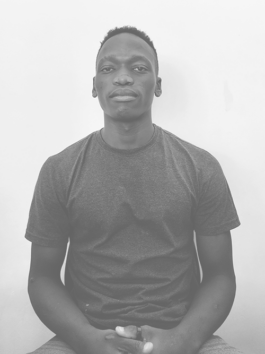
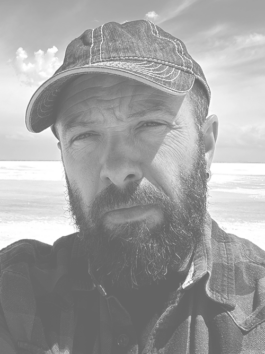
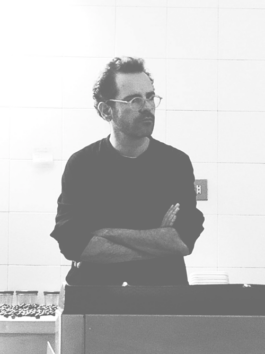
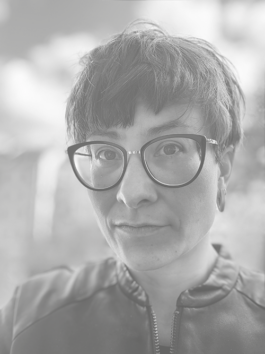
Photo ©Ingo-Christ

Katarína Marková
Katarína Juráni Marková is an interdisciplinary artist working across performance, sound, text, and video. Raised near one of the largest tank factories in the former Eastern Bloc, her practice critically examines infrastructures and the visible and invisible power relations embedded within them.
She studied Theatre Studies at Masaryk University and Scenic Research at Ruhr University Bochum. Her work explores how post-1989 socio-economic transformations in Eastern Europe reshaped and dismantled infrastructures and how these shifts affected places, objects, and bodies—often focusing on peripheral sites.
She is a co-founder of MFK Bochum, a site-specific collective that engages with highway systems and the European road network, particularly East–West connections, and experiments with artistic “hacking” strategies in public space. DIY methods, pleasure, and humour are central to their artistic research approach.
She co-led the workshop series Vibrating Ruins in collaboration with the Centre for Experimental Theatre, KioSK Festival, and the Academy of Fine Arts and Design in Bratislava, which explored post-socialist ruins. Since 2025, she has been part of the group constellation Tactical Body, artistically investigating military infrastructures and connections between Germany and Eastern Europe.
See also:
→ Project: “Ruins and Remnants – Affective Infrastructures in Post-Industrial Lifeworlds” (part of Project 1, “Hollowed-Out Landscapes: Imaginations of Life amid Infrastructures of Extraction”)
Photo ©Marlene Ruther
Takudzwa Mukesi
Takudzwa Mukesi is a multimedia designer, artist, and researcher currently pursuing a PhD in Media Studies at Ruhr University Bochum. He holds a Master’s degree in Architecture from the Namibia University of Science and Technology, a foundation that informs his interdisciplinary approach to art, design, and spatial practice. Takudzwa is also the Creative Director of Xkepticworld and Skhooli, art, architecture, and design houses that use African-surrealism and transient ritual processes as conceptual frameworks. Through these practices, he creates work that celebrates, represents, and critiques diverse human conditions while exploring speculative memory and ritualized spatial practices as tools for interrogating historical, virtual, and embodied realities. Takudzwa’s skills in architecture and beyond are driven by his curiosity about space, time, and lived experience from a Black perspective. These concerns are expressed through art, design, and architecture, enabling him to develop a visceral, human-centred understanding of spaces formed within spiritual, virtual, and physical domains and of the dynamic relationships that exist between them.
See also:
→ Project: “Speculative Infrastructures of Extraction: Afro-Surreal Witnessing of Colonial and Genocidal Continuities in the Hyphen Green Hydrogen Project, Tsau ǁKhaeb National Park” (part of Project 3, “Aesthetic Practices of Attunement as Access to Colonial Infrastructures of Extraction”)
Sam Nightingale
Sam Nightingale is an artist-researcher whose work engages critically with environmental media, experimental photographic practices, and speculative fieldwork. His research examines spectral ecologies—the entangled temporalities and materialities of human and more-than-human life embedded in salt, soil, plant matter, and the residual infrastructures of extraction. Employing expanded fieldwork methodologies, Nightingale combines site-specific investigation, sensory media, and collaborative research across ecologically and historically stratified environments in the United Kingdom, Namibia, and Australia.
Situated within media theory and environmental aesthetics, his work interrogates how aesthetic practices can mediate ecological and infrastructural entanglements, while challenging dominant epistemologies of modernity and extraction. Nightingale’s practice foregrounds ‘natural’ elements as elemental media, critically addressing the ecological and political implications of extractive processes and their contribution to environmental degradation. His work has been presented internationally through residencies, workshops, and exhibitions at institutions including Haus der Kulturen der Welt (HKW), PACT Zollverein, the Bioarts Society in Finland, and the California Institute of the Arts.
He is co-editor of Fieldwork for Future Ecologies: Radical Practice for Art and Art-based Research (2022/26), which reconceptualises fieldwork as a creative and speculative mode of inquiry.
Other recent publications include:
→ “Sensing seaweed and practising photography differently,” in Common Sensing, Centre for Research Architecture #3 (2025)
→ “Seetang,” in Zeitschrift für Medienwissenschaft, Jg. 16 (2024)
→ Feral Labs Node Book #2: Feralities, Bioart Society and Projekt Atol Institute (2024)
→ “Attuning to the politics and poetics of seaweed in the Hebrides,” in Foundry (University of California Humanities Research Institute, 2023)
In his postdoctoral research at Ruhr-Universität Bochum, Nightingale investigates aesthetic practices of attunement as a mode of accessing and critically engaging with colonial infrastructures of extraction in Namibia. This project examines how artistic and media-based practices can reveal the spectral presence of infrastructural systems and their enduring ecological and socio-political consequences.
See also:
→ Project: “xx” (part of Project 3, “Aesthetic Practices of Attunement as Access to Colonial Infrastructures of Extraction”)
Francesco Salvini (pantxo ramas)
Francesco Salvini (pantxo ramas) is a social researcher in the fields of care, institutional critique, and welfare. Drawing on his academic background in the social sciences, political economy and urban studies, as well as his participation in social movements and his experience as a policy advisor, pantxo's research focuses on the possibilities and transformations of care, welfare systems and emancipatory practices in contemporary contexts. Since 2016, he has been working on institutional transformations in care and health in European contexts as part of the Entrar Afuera collective research project, collaborating with local authorities and cultural institutions. Particular collaborations include the Municipality of Barcelona (2015, 2019), the Museo Nacional Centro de Arte Reina Sofía (since 2016), and the Azienda Sanitaria Giuliano Isontina (since 2015) in Trieste. Following roles at universities in England and Ecuador (2008–2019) and collaborations with contemporary art institutions across Europe, pantxo coordinated the Centro Documentazione in Trieste alongside Franco Rotelli. This centre focuses on the history of mental healthcare deinstitutionalisation. The centre was established by the Department of Mental Health of Trieste – WHO Collaborating Centre (2020–2023). Pantxo recently participated in the Museu Habitat programme, run by the Generalitat of Catalonia in Spain. There, he worked as a social researcher on the Edición Social project in Gornal, L'Hospitalet, as part of Entrar Afuera. As part of this collective, he also coordinates the mental healthcare research group at the Centre for Arts Santa Mónica in Barcelona and participates in research initiatives in Gornal. He is a member of the Conferenza Permanente per la Salute Mentale Franco Basaglia. 'SOCIAL EDITING' examines how care is organised on the threshold between situated practices and public infrastructures, exploring the continuous material transformations and mediations affecting care infrastructures and their surroundings in the fields of care and culture in the specific context of Gornal.
See also:
→ Project: “Social Editing” (part of Project 5, “Infrastructures of Care: Sound, Social Editing, and Ciudadanía”)
Marie Sprenger
Marie Sprenger works as a student assistant for the sub-project Aesthetic Practices of Attunement as a Means of Accessing Colonial Infrastructures of Extraction.
She is currently enrolled in a dual-subject Master’s program in Gender Studies and Media Studies. She completed her Bachelor’s degree in European Studies and earned a diploma in International and Comparative Studies. In addition, she is part of the student-led initiative project BiPoC_denken.
Photo ©Peter Gwiazda
Ruth Schmidt
Ruth Schmidt is a researcher, artist, and author. Recently, she has been scientific coordinator of the DFG research unit “Infrastructure: Aesthetics and Supply” and postdoctoral researcher.
From 2023 to2025, she worked as artistic assistant to Xavier Le Roy at the Institute for Applied Theatre Studies in Gießen; from 2018 to2023, she was a research associate in the Master’s program “Scenic Research” at the Institute of Theatre Studies at Ruhr University Bochum. In 2025, she completed her doctorate at Ruhr University Bochum with the dissertation “The Cave, the Clouds, the Sea. Imaginary Infrastructures”.Ruth is co-founder of the artist collective ScriptedReality; from 2012–2021, they realized numerous works that operate at the boundary between performance, intervention, and play, creating situations that enable the unpredictable. Their works were shown nationally and internationally at festivals and art venues (including Mousonturm Frankfurt, FFT Düsseldorf, Ringlokschuppen Ruhr, HAU Berlin, Veem House Amsterdam, Gessnerallee Zurich, Mladi Levi Festival Ljubljana, Bâtard Festival Brussels // scriptedreality.net).
Ruth was involved in the conception of “IMPLANTIEREN–Festival of Shared Practices 2022/23” in Frankfurt, developed formats and workshops between teaching, play, and worldbuilding, worked as a dramaturge for friends, edited radio plays for Südwestrundfunk (2017–2020), and co-authored (with ScriptedReality) the radio feature “Virtual Worlds, Real Crises. Nature and Climate in Video Games” (2025) for Hessischer Rundfunk.
She earned an M.A. in philosophy and literature at Leipzig University and an M.A. in Applied Theatre Studies at Justus Liebig University Gießen.
See also:
→ Project: “Aquatic Infrastructures. Ecologies, Poetics, Practices” (Coordination project)

Jana Kerima Stolzer
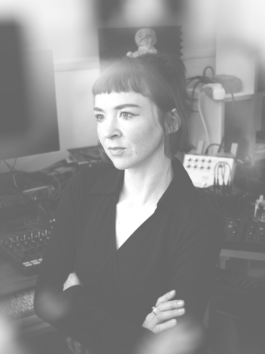
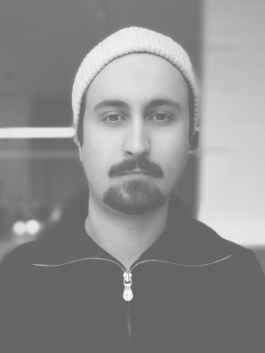
Since 2016, Jana Kerima Stolzer has been creating scenic installations and performances that explore the feedback systems between nature and technology in relation to the Earth. The artist considers the interaction between the environment and living beings not only in relation to human beings, but also to flora and fauna. The protagonists in her multimedia works are mostly beings that have no voice in reality: hybrid beings from nature and technology, plants and animals that convey their own view of the world in musical-like environments. Her artistic research draws on a body of factual research to develop narratives that reveal new connections in the world. Historical and scientific research is mixed with science fiction to explore the possible and impossible for the future. She usually develops her works in collaboration with Lex Rütten. These works are conceptualised for both physical and digital spaces and are presented within the independent theatre scene as well as in exhibition contexts.
After completing her Bachelor of Arts in Photography at the Folkwang University of the Arts, Jana Kerima Stolzer studied fine art with Aernout Mik at the University of Fine Arts Münster, where she graduated as a master student in 2018. From 2018 to 2020, she worked as a curatorial assistant at Urbane Künste Ruhr, followed by a fellowship at the Academy for Theatre and Digitality in Dortmund. Since then, she has been working as a freelance artist and curator.
See also:
→ Project: “Feral Wastelands, Hollowed-Out Subsoil, the (Aesthetic) Experience of Discarded Landscapes. Narratives and New Alliances in a Post-Industrial Environment” (part of Project 1, “Hollowed-Out Landscapes: Imaginations of Life amid Infrastructures of Extraction”)
Jennifer Wermuth
Jennifer Wermuth is a PhD student and research associate within the research group „Infrastructure: Aesthetic and Supply“ at the Institute for Media Studies at the Ruhr-University Bochum. She earned a M.A. in International Cinema Studies (IMACS) in 2023. Her current research is centered around the cinematic aesthetics of catastrophic infrastructural breakdowns (and perhaps the ensuing end of humanity). Other interests within film and media studies include folk and cult horror, conspiracies and digital misinformation, and cognitive estrangements.
See also:
→ Project: „Cosmic Disaster Films as an Aesthetic Repair of Caesural Temporality” (part of Project 2, “Cinematic Infrastructure Scenes”)
Jesko Vorbeck
Jesko Vorbeck holds a BA in Philosophy and German Philology with a focus on Literary Studies from Christian-Albrechts-University zu Kiel, having worked as a student assistant at the Chair of Environmental Ethics. As a curatorial assistant and artistic production manager, he has been responsible in particular for literary events, performances in public spaces, as well as educational and outreach formats at theatres and festivals, including the Schaubühne Berlin, the Ruhrfestspiele Recklinghausen, and the Ruhrtriennale. He is currently finishing his Master's degree in Philosophy and Theatre Studies and is working as a research assistant within the research group's coordination project. His research interests include landscape and environmental aesthetics, theatre and performance ecologies, critical theory, and theories of politics and labour. In artistic collaborations, he deals with various forms of community building such as club membership, intoxication, comedy, uniformity, and their ambiguities.
Paroo’i Tapirapé, Makato Tapirapé
Dr. Ana Coutinho
Prof. Dr. Maria Luísa Lucas
Laura Sabel
Prof. Dr. Susanne Leeb
Prof. Dr. Alfredo Thiermann
Britta Peters
Prof. Dr. Brian Larkin
Imani Jacqueline Brown
Prof. Dr. Sabeth Buchman
Prof. Dr. Astrid Deuber-Mankowsky
Prof. Dr. John Durham Peters
Prof. Dr. Keller Easterling
PD Dr. Kai van Eikels
freethought collective (a.o. Prof. Dr. Stefano Harney, Dr. Louis Moreno, Prof. Dr. Irit Rogoff)
Prof. Dr. Petra Löffler
Dr. Phillip Lühl
Prof. Dr. Rosalind Morris
Prof. Dr. Ulf Otto
Prof. Dr. Dimitris Papadopoulos
Prof. Dr. María Puig de la Bellacasa
Prof. Dr. Gerald Raunig
Prof. Dr. AbdouMaliq Simone
Prof. Dr. José Miguel Wisnik
Urbane Künste Ruhr (Bochum)
Fritz-Hüser-Institut (Dortmund)
Ringlokschuppen Ruhr (Mülheim)
Favoriten Festival (Dortmund)
endstation.kino (Bochum)
Hartware MedienKunstVerein (Dortmund)
Künstler:innenhaus (Dortmund).
Esther Adeyemo
Esther Adeyemo is a British PhD student and research associate at Ruhr-Universität Bochum. She is the recipient of the 2021 Peter Boyle MA Graduate Teaching Assistantship awarded by the British Association for American Studies. In 2023, she completed her MA in American Studies at the University of Wyoming with a thesis entitled “Spectres of Identity: Race, Subjectivity, and Ontological Defiance in Nella Larsen’s Passing (1929).”
Her research focuses on race and decoloniality, subjectivity and identity formation, and the role of Black speculative fiction in reimagining new ways of being and becoming. She is particularly interested in questions of passing, hybridity, and the relationship between genre, infrastructure, and social belonging in twentieth- and twenty-first-century American literature.
Esther has taught undergraduate courses at The University of Wyoming including Cultures of Nature and Introduction to African American Studies, with an emphasis on close reading, interdisciplinary inquiry, and inclusive, discussion-led learning environments.
See also:
→ Project: „The Novel of Passing as an Archive of Infrastructural Resistance“ (part of Project 6, “Race as Infrastructure and Literary Infrastructures of Resistance”
Tomaz Amorim
Dr. Tomaz Amorim is the Principal Investigator of the sub-project "Extractivism and Infrastructure in Brazilian Literature" (TP 4) within the DFG Research Unit Infrastructure: Aesthetics and Supply at Ruhr University Bochum. In addition to his work in Bochum, he is an Associated Investigator at the Maria Sibylla Merian Centre Conviviality-Inequality in Latin America (Mecila), funded by the BMFTR, where he previously served as Academic Coordinator. He is also an Associated Researcher and member of the Executive Board at the Brazilian Center for Analysis and Planning (CEBRAP).
He obtained his PhD in 2018 in Literary Theory and Comparative Literature at the University of São Paulo (USP) with a thesis on Franz Kafka and Walter Benjamin (Contar do tempo interrompido / Narrating Interrupted Time), which included a research stay at Humboldt University of Berlin. He earned his Master's degree at the University of Campinas (Unicamp) as a scholarship holder of the Albertus Magnus Program at the University of Cologne. His academic career in Brazil was supported by scholarships from FAPESP, CAPES, and CNPq. Following his doctorate, he was a Postdoctoral Researcher at Unicamp, where he researched non-modern interfaces in Oswald de Andrade and Walter Benjamin, and a Fellow at the Cluster of Excellence Temporal Communities: Doing Literature in a Global Perspective at the Freie Universität Berlin.
Furthermore, Tomaz Amorim is actively involved at the interface of academia and society, including roles as a teacher and pedagogical consultant for the social movement UNEAFRO Brasil. As a translator, he has translated works by Franz Kafka and Johann Jakob Bachofen into Portuguese. As a writer and critic, he published the volume Arquipélago: literatura brasileira contemporânea (2023) as well as the poetry collections Plástico pluma (2018) and Meia-lua soco (2020). His upcoming editorships include Na Semana que vem: História e futuro da Semana de Arte Moderna de 1922 (Editora da Unicamp, 2026) and Aesthetics of Extractivism (Mecila, Clacso, 2026).
His current research project investigates the aesthetic configurations of extractivism in Brazilian literature. He analyzes how infrastructural forms—from coffee plantations to mining—shape literary genres and modes of narration. The focus lies on the ambivalence of a modernization that is never completed and is potentially blocked by extractivism itself. The corpus comprises a revision of Brazilian Modernism from the perspective of extractivist practices as well as contemporary catastrophe literature. Particular attention is paid to Indigenous and Quilombola perspectives, which propose non-extractivist relationships to the territory through innovative aesthetic forms tied to non-Western epistemologies.
See also:
→ Project 4: „Extractivism and Infrastructure in the Brazilian Literature“
Photo ©Joelson-Silva
Laura Bieger
Laura Bieger is Professor of American Literature and Culture at Ruhr-Universität Bochum. She is the author of Reading for Democracy (Metzler 2025), Belonging and Narrative (transcript 2018), and Ästhetik der Immersion (transcript 2007). Her essays have appeared in New Literary History, Narrative, Parallax, Studies in American Naturalism, Amerikastudien/American Studies and ZAA. She is a member of the DFG-funded Research Group “Infrastructure: Aesthetics and Supply,” where she leads the project “‘Race as Infrastructure’ and Literary Infrastructures of Resistance.” Together with Philipp Loeffler, she is currently co-editing two special issues: “After Contemporary Literature” for American Literature, and “What was Contemporary Literature? Or: The End of Periodization as We Know It” for Post45.
See also:
→ Project: „Genre as Infrastructure and the Specter of Race“ and “The Literary Engines of the Underground Railroad” (part of Project 6, “Race as Infrastructure and Literary Infrastructures of Resistance”)
Photo ©Damian Gorczany
Gabriel Carneiro
Gabriel Carneiro (GABS_) works in theater, performance, and artistic mediation. Studied theater and education in Brazil and holds an M.A. in Scenic Research from Ruhr University Bochum. Research explores resonances between acting practice and dramaturgy, and themes such as migration, sustainability, cultural diversity, and queer ecologies from a Global South perspective. GABS_ works as a student research assistant in Subproject 4 of the Research Unit.
Natalie Erkel
Natalie Erkel is a German-American PhD student and research assistant (wissenschaftliche Mitarbeiterin) at Ruhr-Universität Bochum (RUB). She holds both German and U.S. secondary school diplomas and graduated from Georg-August-Universität Göttingen in 2022 with a Master of Education in French and English, as well as a Master of Arts in North American Studies and English: Language, Literatures and Cultures. She also spent two years abroad studying French, English, and comparative literature at the Université de Tours in Tours, France, and at the Universidad Nacional Autónoma de México (UNAM) in Mexico City. During her studies, she was a member of the German Academic Scholarship Foundation (Studienstiftung des deutschen Volkes). At Georg-August-Universität Göttingen, she taught numerous courses in English didactics, U.S. cultural history, short fiction, and academic writing. At Ruhr-Universität Bochum, she has taught courses entitled Cultural History and Rhetoric: Feminism in the U.S., Women’s Writing in the 19th and 20th Century, Feminist Utopias and Dystopias, Contemporary Science Fiction, Manifestos, Representations of Slavery, and Transcendentalism (Emily Dickinson and Walt Whitman). Her research interests include feminism, gender studies, Afrofuturism, utopian and dystopian literature, and speculative fiction.
See also:
→ Project: “Black Speculative Fiction as an Infrastructure of Afrofuturist Art and Community Building” (part of Project 6, “Race as Infrastructure and Literary Infrastructures of Resistance”)
Jörn Etzold
Jörn Etzold has been Professor of Theater Studies at the Ruhr University Bochum since 2017. He is spokesperson of the Research Unit and leads project 1. He also is the spokesperson of the Humanities Hub Spaces in Transition: Resources, Entangled Histories, Material Practices at Ruhr University. From 2020-2025, he has been PI of the DFG Research Training Group Documentary Practices. Etzold was Senior Fellow of the Merian Centre Mecila in São Paulo in 2023 and Visiting Associate Professor at Northwestern University, Evanston in 2015. He has also conducted research and taught at the universities of Giessen, Erfurt, Weimar and Frankfurt am Main. He is currently researching infrastructure and aesthetics, theater and performance in post-industrial environments and theater and legal criticism. He has also been active as a theater maker and translator.
Recent publications include:
→ „The Nambikwara Case”, in: INSERT. Artistic Practices as Cultural Inquiries, no. 8, Transforming the Anthropo(s)cene, 2025, DOI: https://doi.org/10.5281/zenodo.17771772
→ "Extraktive Prozesse. Tatorte und Gerichtsorte in Milo Raus Kongo Tribunal“, in: Manuel Baumbach, Yasmin Temelli (ed.): TatOrte: Räume des Kapitalverbrechens von der Antike bis heute, Heidelberg: Winter 2025, pp. 175-197.
→ Prävention. Zur Immunisierung von Körpern und Gemeinwesen, Hamburg: Textem 2023
→ „Textuelle Infrastrukturen des Theaters. Dramaturgie als Vermittlung“, in: Journal of Literary Theory, vol. 17, no. 1, 2023, pp. 88-110.
→ As editor: Special Issue: Ästhetik der Infrastruktur (Aesthetics of Infrastructure), Sprache und Literatur, vol. 127, no. 1, 2023.
Forthcoming inter alia:
→ „Legale Ambiguität und Infrastruktur (São Paulo) Ein Essay“, in: Archiv für Mediengeschichte, no. 21, 2024 [2026]
→ As editor with Tomaz Amorim: Estéticas del extractivismo, Buenos Aires: CLACSO 2026
→ Theatres of the Proto-Juridical. The Russell Tribunals, London: Routledge 2026.
See also:
→Project: „Art Institutions and their Infrastructure in Deindustrialization and Extractivism” (part of Project 1, “Hollowed-Out Landscapes: Imaginations of Life amid Infrastructures of Extraction”)
Photo ©Damian Gorczany
Oliver Fahle
Oliver Fahle is Professor of Film Studies at Ruhr-University Bochum and principal investigator of the research unit “Infrastructure: Aesthetics and Supply” at the Ruhr-University Bochum. He was one of the principal investigators of the doctoral school (Graduiertenkolleg) “The Documentary: Excess and Deprivation” (2016–2025). He is also responsible for the administration of the IMACS Master degree program in Bochum together with Hannah Peuker. His research focuses on the theory and aesthetics of contemporary film, documentary film, and Brazilian cinema. He is particularly interested in the transformations of film under the influence of other media.
His most important or recent publications:
Books:
→ Theorien des Dokumentarfilms: Zur Einführung, Hamburg 2020
→ also in Italian translation: Teorie del film documentario, Torino: Einaudi 2023.
→ Friedrich Balke, Oliver Fahle, Annette Urban: (ed.) Das Dokumentarische der Gegenwart, Bielefeld 2020.
Articles:
→ Oliver Fahle: Der Leihraum. Tiere und die Grenze zwischen Leben und Tod, in: S. Lederle, J. Seifert, M. Siegler (Hg.): Grundbegriffe der Medienphilosophie. Zwischen Affekt Relation Milieu, München: Brill/Fink 2024, S. 101–119.
→ Oliver Fahle: Katastrophe, Klasse, Katharsis. Schiffbrüche im Film, in: M. Baumbach/Y. Temelli (Hg.): Schiffbruch. Von Untergängen und Neuanfängen, Stuttgart 2024, S. 309–324.
→ Oliver Fahle und Felix Hasebrink: Film/Infrastruktur/Szene, in: Sprache und Literatur 52, H. 127, München 2023, S. 95–115.
→ Oliver Fahle: Andere Szenen. Geschichte und Diskurs des zeitgenössischen brasilianischen Dokumentarfilms, in: Montage AV 30/01/22, S. 37–55.
See also:
→ Project: „Data-based Cinematic Scenes of Infrastructure” (part of Project 2, “Cinematic Infrastructure Scenes”)
Henriette Gunkel
Henriette Gunkel is Professor of Transformation of Audiovisual Media with a Focus on Gender and Queer Theory at the Institute for Media Studies at Ruhr University Bochum. Her research focuses on memory practices, infrastructures of extraction, and politics of time from a decolonizing and queer-feminist perspective. She is currently working on a monograph titled Genocidal Remains: Sand, Atmosphere, Memorialization.
See also:
→ Project: „Desert Memory: Infra-Aesthetics and Atmospheric Remains in the Afterlife of Namibia’s Genocide” (part of Project 3, “Aesthetic Practices of Attunement as Access to Colonial Infrastructures of Extraction”)
Felix Hasebrink
Felix Hasebrink is a postdoctoral research associate at the Institute for Media Studies at Ruhr University Bochum and a Principal Investigator of the research group "Infrastructure: Aesthetics and Supply." He earned a B.A. and M.A. in Media Studies and Comparative Literature from Ruhr-University Bochum. His PhD dissertation on the aesthetics of film production in contemporary "making-of" documentaries was published by transcript in 2024. He worked as a research associate at the Institute for Media Studies at Ruhr University Bochum as well as at the Institute of Art and Visual Culture at the University of Oldenburg. His current research focuses on cinematic aesthetics of infrastructure, audiovisual media, and physical remains, and the history and theory of animation.
See also:
→ Project: „Idle Worlds. On the Media Aesthetics of Vacant Infrastructure” (part of Project 2, “Cinematic Infrastructure Scenes”)
Photo ©Ansgar Dlugos
Sara Jiménez Fernández
Sara Jiménez Fernández is a researcher working through collective practices in the intersection of care, sound, feminist theory, and political aesthetics. With an academic background in contemporary philosophy and gender studies, her trajectory combines philosophical research with situated, practice-based inquiry, engaging sound as a material and relational force in social and political life. Her research is shaped by feminist, queer, and Marxian traditions, as well as by new materialist and decolonial approaches that question representational and oculocentric regimes of knowledge. Across her academic formation, she has developed a sustained interest in listening, vibration, and resonance as modes of knowing, caring, and collectively composing social relations beyond the visual and the discursive. Her work has been actively involved in neighborhood-based cultural and political initiatives in Málaga, particularly in the Lagunillas district. These long-term engagements have been central to her research trajectory, grounding her theoretical work in struggles around housing, touristification, care, and the erosion of public infrastructures. She is a member of the Málaga-based sound collective Sonido Invisible and a co-organiser of the self-organised radical study programme PER, which connects theoretical practice, collective learning, and local political imaginaries.
She is also co-founder and a member of SUBURBIA and Subtextos, a bookstore, independent publishing project, and experimental study centre rooted in the neighbourhood and the city. Through this platform, she develops editorial, educational, and research practices that connect philosophy, political theory, and urban experience, fostering collective forms of study and knowledge production beyond academic institutions.
Her doctoral project, Sonic Mattering, builds on this trajectory by examining how aural practices contribute to the emergence of infrastructures of care in contexts marked by infrastructural neglect and urban extraction. Combining philosophical research with sound experimentation, collective listening, community radio, and archival practices, her work explores how care can be materially sensed, shared, and instituted through sound.
Sara’s research consistently bridges philosophy, sound practices, and social movements, contributing to collective forms of knowledge production oriented toward care and alternative forms of living together.
See also:
→ Project: “Sonic Mattering: Aural Infraestructures of Care” (part of Project 5, “Infrastructures of Care: Sound, Social Editing, and Ciudadanía”)
Isabell Lorey
Isabell Lorey is a political theorist and holds the professorship for Queer Studies in the Arts and Sciences at the Academy of Media Arts Cologne (KHM) since 2018. Before, she taught at the universities of Basel, Berlin, Kassel, and Vienna. She is a member of the editorial collective of the eipcp’s (European Institute for Progressive Cultural Policies) experimental digital multilingual publication platform transversal.at. Her work focuses on social movements, precarization, neoliberalism, and alternative forms of democracy. She also researches revolutionary approaches to psychiatry, particularly the work of François Tosquelles, as well as the history of European psychiatry.
Her books and texts have been translated into several languages. Immer Ärger mit dem Subjekt. Zu Butler und Foucault, new edition with a preface, Vienna et al: transversal texts, 2017 (Disputas sobre el sujeto. Consecuencias teóricas y políticas de un modelo de poder jurídico: Judith Butler, trans. by Malena Nijensohn, Buenos Aires: La Cebra, 2017); Figuren des Immunen. Elemente einer politischen Theorie, Berlin/Zürich: Diaphanes, 2011; Die Regierung der Prekären, with a preface by Judith Butler, Vienna: Turia+Kant 2012/2020 (State of Insecurity. Government of the Precarious, trans. by Aileen Derieg, London: Verso, 2015; Estado de inseguridad. Gobernar la precariedad, trans. by Raúl Sanchez Cedillo, Madrid: Traficantes de Sueños, 2016), Demokratie im Präsens. Eine Theorie der politischen Gegenwart, Berlin: Suhrkamp, 2020 (Democracy in the political present. A queer-feminist theory, trans. together with Lisa Rosenblatt, London: Verso, 2022; Democracia en presente, trans. by Marta Malo de Molina and Sara Jiménez Fernández, Málaga: subtextos, 2023 and Buenos Aires: Tinta Limon, 2023. Lorey edited the special issue of the multilingual webjournal transversal: “QUEER TOSQUELLES: Anti-Fascism, Vagabonding Psychiatry, Non-Identitarian Lives”, October 2025, https://transversal.at/transversal/1025 (see also the audio series: https://transversal.at/blog/queer-tosquelles-audio-series). See also the anthology she edited: Tosquelles. Queer and transversal, London: minor compositions, 2026 (in German Tosquelles: queer und transversal, Vienna et al: transversal texts, 2026). Several of her texts can be found in various languages on transversal.at.
Currently Lorey is writing a book on the history of revolutionary critiques of psychiatry, its strategies against fascization in the 1930s to the 1950s and its impacts on poststructuralist philosophy.
See also:
→ Project: “Vagabonding Care” (part of Project 5, “Infrastructures of Care: Sound, Social Editing, and Ciudadanía”)
Isabell Maar
Isabell Maar (she/her) is currently completing her Bachelor’s degree in Theatre Studies and Comparative Literature. Her research interests include 20th-century exile literature. She works as a student research assistant in Subproject 1 of the research group. She has worked as an assistant in set and costume design at Schauspielhaus Wuppertal, as well as in the props department at Schauspielhaus Bochum. Most recently, she completed an internship at Tanzwerkstatt Europa in Munich.
Photo ©Ingo-Christ
Katarína Marková
Katarína Juráni Marková is an interdisciplinary artist working across performance, sound, text, and video. Raised near one of the largest tank factories in the former Eastern Bloc, her practice critically examines infrastructures and the visible and invisible power relations embedded within them.
She studied Theatre Studies at Masaryk University and Scenic Research at Ruhr University Bochum. Her work explores how post-1989 socio-economic transformations in Eastern Europe reshaped and dismantled infrastructures and how these shifts affected places, objects, and bodies—often focusing on peripheral sites.
She is a co-founder of MFK Bochum, a site-specific collective that engages with highway systems and the European road network, particularly East–West connections, and experiments with artistic “hacking” strategies in public space. DIY methods, pleasure, and humour are central to their artistic research approach.
She co-led the workshop series Vibrating Ruins in collaboration with the Centre for Experimental Theatre, KioSK Festival, and the Academy of Fine Arts and Design in Bratislava, which explored post-socialist ruins. Since 2025, she has been part of the group constellation Tactical Body, artistically investigating military infrastructures and connections between Germany and Eastern Europe.
See also:
→ Project: “Ruins and Remnants – Affective Infrastructures in Post-Industrial Lifeworlds” (part of Project 1, “Hollowed-Out Landscapes: Imaginations of Life amid Infrastructures of Extraction”)
Photo ©Marlene Ruther
Takudzwa Mukesi
Takudzwa Mukesi is a multimedia designer, artist, and researcher currently pursuing a PhD in Media Studies at Ruhr University Bochum. He holds a Master’s degree in Architecture from the Namibia University of Science and Technology, a foundation that informs his interdisciplinary approach to art, design, and spatial practice. Takudzwa is also the Creative Director of Xkepticworld and Skhooli, art, architecture, and design houses that use African-surrealism and transient ritual processes as conceptual frameworks. Through these practices, he creates work that celebrates, represents, and critiques diverse human conditions while exploring speculative memory and ritualized spatial practices as tools for interrogating historical, virtual, and embodied realities. Takudzwa’s skills in architecture and beyond are driven by his curiosity about space, time, and lived experience from a Black perspective. These concerns are expressed through art, design, and architecture, enabling him to develop a visceral, human-centred understanding of spaces formed within spiritual, virtual, and physical domains and of the dynamic relationships that exist between them.
See also:
→ Project: “Speculative Infrastructures of Extraction: Afro-Surreal Witnessing of Colonial and Genocidal Continuities in the Hyphen Green Hydrogen Project, Tsau ǁKhaeb National Park” (part of Project 3, “Aesthetic Practices of Attunement as Access to Colonial Infrastructures of Extraction”)
Sam Nightingale
Sam Nightingale is an artist-researcher whose work engages critically with environmental media, experimental photographic practices, and speculative fieldwork. His research examines spectral ecologies—the entangled temporalities and materialities of human and more-than-human life embedded in salt, soil, plant matter, and the residual infrastructures of extraction. Employing expanded fieldwork methodologies, Nightingale combines site-specific investigation, sensory media, and collaborative research across ecologically and historically stratified environments in the United Kingdom, Namibia, and Australia.
Situated within media theory and environmental aesthetics, his work interrogates how aesthetic practices can mediate ecological and infrastructural entanglements, while challenging dominant epistemologies of modernity and extraction. Nightingale’s practice foregrounds ‘natural’ elements as elemental media, critically addressing the ecological and political implications of extractive processes and their contribution to environmental degradation. His work has been presented internationally through residencies, workshops, and exhibitions at institutions including Haus der Kulturen der Welt (HKW), PACT Zollverein, the Bioarts Society in Finland, and the California Institute of the Arts.
He is co-editor of Fieldwork for Future Ecologies: Radical Practice for Art and Art-based Research (2022/26), which reconceptualises fieldwork as a creative and speculative mode of inquiry.
Other recent publications include:
→ “Sensing seaweed and practising photography differently,” in Common Sensing, Centre for Research Architecture #3 (2025)
→ “Seetang,” in Zeitschrift für Medienwissenschaft, Jg. 16 (2024)
→ Feral Labs Node Book #2: Feralities, Bioart Society and Projekt Atol Institute (2024)
→ “Attuning to the politics and poetics of seaweed in the Hebrides,” in Foundry (University of California Humanities Research Institute, 2023)
In his postdoctoral research at Ruhr-Universität Bochum, Nightingale investigates aesthetic practices of attunement as a mode of accessing and critically engaging with colonial infrastructures of extraction in Namibia. This project examines how artistic and media-based practices can reveal the spectral presence of infrastructural systems and their enduring ecological and socio-political consequences.
See also:
→ Project: “xx” (part of Project 3, “Aesthetic Practices of Attunement as Access to Colonial Infrastructures of Extraction”)
Francesco Salvini (pantxo ramas)
Francesco Salvini (pantxo ramas) is a social researcher in the fields of care, institutional critique, and welfare. Drawing on his academic background in the social sciences, political economy and urban studies, as well as his participation in social movements and his experience as a policy advisor, pantxo's research focuses on the possibilities and transformations of care, welfare systems and emancipatory practices in contemporary contexts. Since 2016, he has been working on institutional transformations in care and health in European contexts as part of the Entrar Afuera collective research project, collaborating with local authorities and cultural institutions. Particular collaborations include the Municipality of Barcelona (2015, 2019), the Museo Nacional Centro de Arte Reina Sofía (since 2016), and the Azienda Sanitaria Giuliano Isontina (since 2015) in Trieste. Following roles at universities in England and Ecuador (2008–2019) and collaborations with contemporary art institutions across Europe, pantxo coordinated the Centro Documentazione in Trieste alongside Franco Rotelli. This centre focuses on the history of mental healthcare deinstitutionalisation. The centre was established by the Department of Mental Health of Trieste – WHO Collaborating Centre (2020–2023). Pantxo recently participated in the Museu Habitat programme, run by the Generalitat of Catalonia in Spain. There, he worked as a social researcher on the Edición Social project in Gornal, L'Hospitalet, as part of Entrar Afuera. As part of this collective, he also coordinates the mental healthcare research group at the Centre for Arts Santa Mónica in Barcelona and participates in research initiatives in Gornal. He is a member of the Conferenza Permanente per la Salute Mentale Franco Basaglia. 'SOCIAL EDITING' examines how care is organised on the threshold between situated practices and public infrastructures, exploring the continuous material transformations and mediations affecting care infrastructures and their surroundings in the fields of care and culture in the specific context of Gornal.
See also:
→ Project: “Social Editing” (part of Project 5, “Infrastructures of Care: Sound, Social Editing, and Ciudadanía”)
Marie Sprenger
Marie Sprenger works as a student assistant for the sub-project Aesthetic Practices of Attunement as a Means of Accessing Colonial Infrastructures of Extraction.
She is currently enrolled in a dual-subject Master’s program in Gender Studies and Media Studies. She completed her Bachelor’s degree in European Studies and earned a diploma in International and Comparative Studies. In addition, she is part of the student-led initiative project BiPoC_denken.
Photo ©Peter Gwiazda
Ruth Schmidt
Ruth Schmidt is a researcher, artist, and author. Recently, she has been scientific coordinator of the DFG research unit “Infrastructure: Aesthetics and Supply” and postdoctoral researcher.
From 2023 to2025, she worked as artistic assistant to Xavier Le Roy at the Institute for Applied Theatre Studies in Gießen; from 2018 to2023, she was a research associate in the Master’s program “Scenic Research” at the Institute of Theatre Studies at Ruhr University Bochum. In 2025, she completed her doctorate at Ruhr University Bochum with the dissertation “The Cave, the Clouds, the Sea. Imaginary Infrastructures”.Ruth is co-founder of the artist collective ScriptedReality; from 2012–2021, they realized numerous works that operate at the boundary between performance, intervention, and play, creating situations that enable the unpredictable. Their works were shown nationally and internationally at festivals and art venues (including Mousonturm Frankfurt, FFT Düsseldorf, Ringlokschuppen Ruhr, HAU Berlin, Veem House Amsterdam, Gessnerallee Zurich, Mladi Levi Festival Ljubljana, Bâtard Festival Brussels // scriptedreality.net).
Ruth was involved in the conception of “IMPLANTIEREN–Festival of Shared Practices 2022/23” in Frankfurt, developed formats and workshops between teaching, play, and worldbuilding, worked as a dramaturge for friends, edited radio plays for Südwestrundfunk (2017–2020), and co-authored (with ScriptedReality) the radio feature “Virtual Worlds, Real Crises. Nature and Climate in Video Games” (2025) for Hessischer Rundfunk.
She earned an M.A. in philosophy and literature at Leipzig University and an M.A. in Applied Theatre Studies at Justus Liebig University Gießen.
See also:
→ Project: “Aquatic Infrastructures. Ecologies, Poetics, Practices” (Coordination project)
Jana Kerima Stolzer
Since 2016, Jana Kerima Stolzer has been creating scenic installations and performances that explore the feedback systems between nature and technology in relation to the Earth. The artist considers the interaction between the environment and living beings not only in relation to human beings, but also to flora and fauna. The protagonists in her multimedia works are mostly beings that have no voice in reality: hybrid beings from nature and technology, plants and animals that convey their own view of the world in musical-like environments. Her artistic research draws on a body of factual research to develop narratives that reveal new connections in the world. Historical and scientific research is mixed with science fiction to explore the possible and impossible for the future. She usually develops her works in collaboration with Lex Rütten. These works are conceptualised for both physical and digital spaces and are presented within the independent theatre scene as well as in exhibition contexts.
After completing her Bachelor of Arts in Photography at the Folkwang University of the Arts, Jana Kerima Stolzer studied fine art with Aernout Mik at the University of Fine Arts Münster, where she graduated as a master student in 2018. From 2018 to 2020, she worked as a curatorial assistant at Urbane Künste Ruhr, followed by a fellowship at the Academy for Theatre and Digitality in Dortmund. Since then, she has been working as a freelance artist and curator.
See also:
→ Project: “Feral Wastelands, Hollowed-Out Subsoil, the (Aesthetic) Experience of Discarded Landscapes. Narratives and New Alliances in a Post-Industrial Environment” (part of Project 1, “Hollowed-Out Landscapes: Imaginations of Life amid Infrastructures of Extraction”)
Jennifer Wermuth
Jennifer Wermuth is a PhD student and research associate within the research group „Infrastructure: Aesthetic and Supply“ at the Institute for Media Studies at the Ruhr-University Bochum. She earned a M.A. in International Cinema Studies (IMACS) in 2023. Her current research is centered around the cinematic aesthetics of catastrophic infrastructural breakdowns (and perhaps the ensuing end of humanity). Other interests within film and media studies include folk and cult horror, conspiracies and digital misinformation, and cognitive estrangements.
See also:
→ Project: „Cosmic Disaster Films as an Aesthetic Repair of Caesural Temporality” (part of Project 2, “Cinematic Infrastructure Scenes”)
Jesko Vorbeck
Jesko Vorbeck holds a BA in Philosophy and German Philology with a focus on Literary Studies from Christian-Albrechts-University zu Kiel, having worked as a student assistant at the Chair of Environmental Ethics. As a curatorial assistant and artistic production manager, he has been responsible in particular for literary events, performances in public spaces, as well as educational and outreach formats at theatres and festivals, including the Schaubühne Berlin, the Ruhrfestspiele Recklinghausen, and the Ruhrtriennale. He is currently finishing his Master's degree in Philosophy and Theatre Studies and is working as a research assistant within the research group's coordination project. His research interests include landscape and environmental aesthetics, theatre and performance ecologies, critical theory, and theories of politics and labour. In artistic collaborations, he deals with various forms of community building such as club membership, intoxication, comedy, uniformity, and their ambiguities.
Paroo’i Tapirapé, Makato Tapirapé
Dr. Ana Coutinho
Prof. Dr. Maria Luísa Lucas
Laura Sabel
Prof. Dr. Susanne Leeb
Prof. Dr. Alfredo Thiermann
Britta Peters
Prof. Dr. Brian Larkin
Imani Jacqueline Brown
Prof. Dr. Sabeth Buchman
Prof. Dr. Astrid Deuber-Mankowsky
Prof. Dr. John Durham Peters
Prof. Dr. Keller Easterling
PD Dr. Kai van Eikels
freethought collective (a.o. Prof. Dr. Stefano Harney, Dr. Louis Moreno, Prof. Dr. Irit Rogoff)
Prof. Dr. Petra Löffler
Dr. Phillip Lühl
Prof. Dr. Rosalind Morris
Prof. Dr. Ulf Otto
Prof. Dr. Dimitris Papadopoulos
Prof. Dr. María Puig de la Bellacasa
Prof. Dr. Gerald Raunig
Prof. Dr. AbdouMaliq Simone
Prof. Dr. José Miguel Wisnik
Urbane Künste Ruhr (Bochum)
Fritz-Hüser-Institut (Dortmund)
Ringlokschuppen Ruhr (Mülheim)
Favoriten Festival (Dortmund)
endstation.kino (Bochum)
Hartware MedienKunstVerein (Dortmund)
Künstler:innenhaus (Dortmund).

Contact
DFG Research Unit 5710 “Infrastructure: Aesthetics and Supply”
Ruhr-Universität Bochum
Universitätsstraße 150, GB 3/38, Postfach 155
44801 Bochum




Contact
DFG Research Unit 5710 “Infrastructure: Aesthetics and Supply”
Ruhr-Universität Bochum
Universitätsstraße 150, GB 3/38, Postfach 155
44801 Bochum